Monday, February 26, 2007

Visiting Old Friends

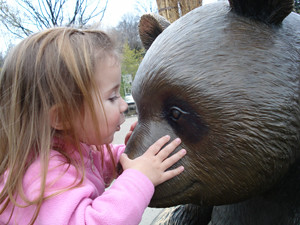
Ever since we took Abbey to the National Zoo last April, she has been just fascinated with pandas. Those of you that know her well are aware that on many days she asserts that she is a pandamonkey. If you're lucky, she'll assert that you are one too.

On Monday, we went to visit her friends again. Tia Shan will be two years old in July. Like Abbey, he is working on weening. Of course, with pandas it's easier. You just put them in a different cage than mom.

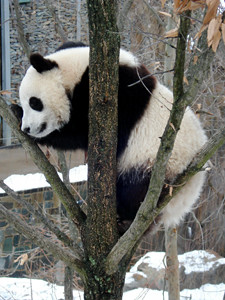
To deal with his cravings, grumpy Tia Shan found a tree in the back of his cage to climb up into and go to sleep. Unfortunately for him, the tourons finally spied him up there and made a ruckus snapping pictures from the overlook nearby.

Abbey also used the day to get over her night time fear of elephants, giggle at the lone hippo floating in a tank, and to check out all the colorful birds.

But in the end, the pandas we by far her favorite exhibit. Do you think so?

Interested in seeing more of the National Zoo pandas? Do what Abbey frequently does and check out the pandacam.

Friday, February 23, 2007

A Little About My Work

On Monday, I gave a presentation at Calvin College that I was asked to make regarding childhood lead poisoning and environmental justice. The notice on the campus calendar resulted in a query from Kirstin Vander Giessen-Reitsma for a submission to Catapult Magazine. Catapult is a pretty cool netzine for recovering Calvinists and others interested in culture, faith and community.

In response to her query, and since I had already collected my thoughts for the presentation, I provided this article.

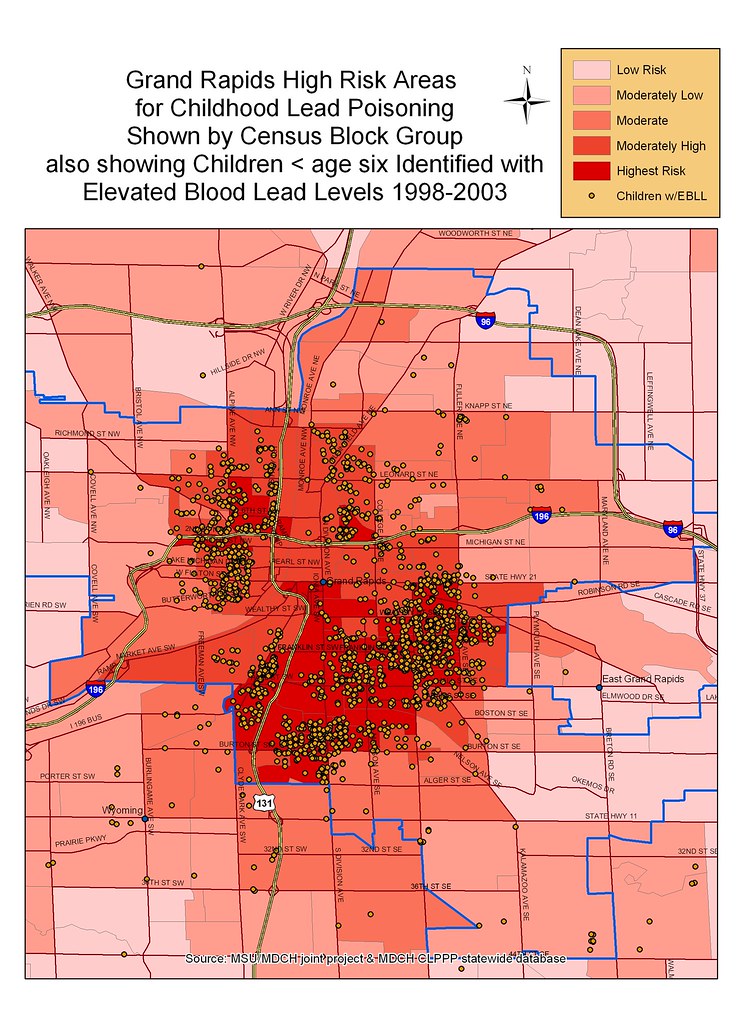
By way of a little background, here's a map that shows where the kids who have lead poisoning in Grand Rapids live. Those of you familiar with our fair city will see the clear link between income, race, ethnicity and lead. Click the map for a larger version.

For more data and maps, download this PDF (5.6 MB) from my work website.

Sunday, February 18, 2007

Reading for the Road Ahead

Next weekend, Julie and I are taking off for Washington DC then up to New Hampshire for a few days. In preparation, I went to Schuler Books to pick up Gary Snyder's new release Back on the Fire. Surprisingly, they didn't have a single copy in stock. So I placed my special order and then set about browsing.

I came across a newly released book of poems by Mary Oliver called "Thirst." I flipped open the cover and read on the inside flap that this is her first published book of new poetry since the death of her companion of 40 years. I then sampled a few poems and saw that this book of poetry takes Oliver in the direction of looking more directly at faith.

The book opens with the poem Messenger.

My work is loving the world.
Here the sunflowers, there the hummingbird--
equal seekers of sweetness.
Here the quickening yeast; there the blue plums.
Here the clam deep in the speckled sand.

Are my boots old? Is my coat torn?
Am I no longer young, and still not half-perfect? Let me
keep my mind on what matters,
which is my work,

which is mostly standing still and learning to be
astonished.
The phoebe, the delphinium.
The sheep in the pasture, and the pasture.
Which is mostly rejoicing, since all the ingredients are here,

which is gratitude, to be given a mind and a heart
and these body-clothes,
a mouth with which to give shouts of joy
to the moth and the wren, to the sleepy dug-up clam,
telling them all, over and over, how it is
that we live forever.

Sunday, February 11, 2007

Bread

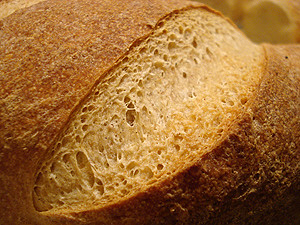
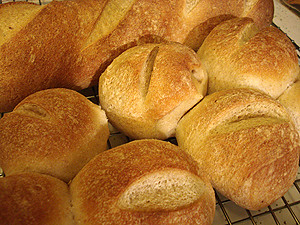
One of the hardest things about baking bread is that you can't dig into the stuff right away when it comes out of the oven. You have to let it cool for a while.

So what to do with those forty minutes while you're waiting for the bread to cool? Take some pictures and blog about it.

The bread and rolls pictured here are Pain de Campagne. The recipe comes from The Bread Baker's Apprentice by Peter Reinhart. I augmented the recipe with a pinch of ascorbic acid, a scant teaspoon of extra wheat gluten, and a couple of pinches of cane sugar (I was out of malt powder).

Now it's time to warm up the squash soup and dig in!

Thursday, February 08, 2007

Frustrated Gardener

It's kind of cruel that the seed companies proffer their bounty by sending out catalogues in December and encouraging us gardeners to order our seeds in January, thus fooling ourselves that gardening season is almost here.

I got both of my seed orders in the mail today... but the garden is covered by 18" of snow and the temperature is 14 degrees (which frankly, is a heat wave for this week).

My home is too dry and cold for starting seedlings, so I don't even get to prepare for that activity. Instead, I just get to sort through my little packets and page through the catalogues some more.

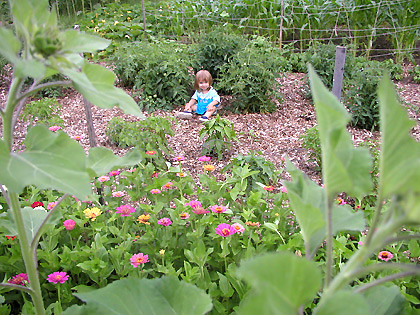
To further stimulate my longing for workable soil, I put this picture of Abbey settin' by the 'maters in Perkins in July on the desktop of my Mac.

Saturday, February 03, 2007

Perkins Perch

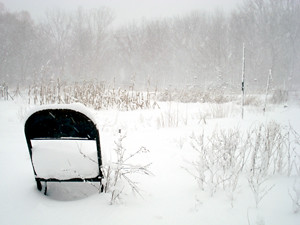
This morning, I met two others from the Perkins Community Garden for breakfast to lay plans for the coming year. The breakfast was a good excuse to get me out of the house on a morning that turned into a literal blizzard that dumped 12" of snow in Grand Rapids.


On the way home, I swung by Perkins to check out the garden in winter. While I was there, I snapped this picture of the folding chair that I sit on to read while watering. In the distance is the leftover corn stalks and the dried out flower bed.

I'm eager for this year. Seed orders from Johnny's and Seeds of Change will be made online tonight.

I'm also helping the Greater Grand Rapids Food Systems Council promote the Perkins Community Garden on their web site.

Bad Bananas


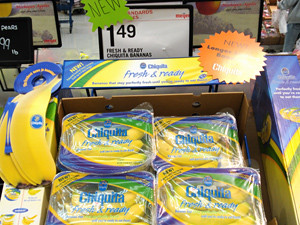
I was in the grocery store about a month ago when I first spotted this amazing sight. Could you imagine paying $1.49 for three bananas?

What rube came up with the notion that a fruit born with a perfectly good wrapper needs to be wrapped in petroleum-based plastics?

Here's what one food industry web site had to say about these bad bananas on their web site, referring to these bananas as a "better mousetrap,"

If you ask consumers to list their most popular fruit, bananas would top the list for many. But bananas have one annoying problem: they tend to ripen too quickly for many consumers. Now there is a solution, with Chiquita's new Fresh & Ready Bananas that are packaged in a patented FreshPak plastic sealed tray. The tray lets in just the right amount of air to slow the ripening process naturally, keeping bananas fresh for up to 4 days longer. The product is new in the US.
All that for four days?

Apparently these bananas are being test marketed in the fair state of Michigan. To learn more about marketing gone mad, see this article in the Cincinnati Business Courier.

The really amazing thing about this dumb idea is that people actually buy these things. Who are those people?

Wednesday, January 31, 2007

Local Thoughts

A couple of things I did this week got me to thinking a bit about how much plain old ordinary folks have to offer.

Monday evening I went to hear Wangari Maathai speak about the Greenbelt Movement, a now international movement to reforest central Africa. Dr. Maathai spoke about how she moved from a scientific study of the effects of ticks on cattle to a commonsense study of Kenyan women, their needs, and trees. The short of it is that she listened to and worked with these women to figure out how to heal their land through reforestation so that they themselves could be healthy.

She told many stories of how conventional science and forestry were trumped by the local knowledge and hard work of individual women.

Tonight, I went to see the film "Broken Limbs," which tells the stories of apple farmers in the Wenatchee Valley of central Washington. The film was sponsored by Farms Without Harm and the Greater Grand Rapids Food Systems Council.

The film explored the impacts of globalization and the current consumer-driven, industrial-scale food system on the livelihood of apple farmers. Not all doom and gloom, the film wrapped up by sharing the stories of some farmers who discovered how to operate in the face of such a seemingly all-powerful system. It also spoke of the non-farming folk that are an important part of the equation.

After the film, a man got up and spoke about his work as a local farmer. He spewed a bunch of half-baked philosophy about the "fundamental" solutions to health and the environment. But where his talk was as holey as Swiss cheese, his actions are to be admired. This farmer, along with some others, has made the connection between the food he grows and the health system that spends so much time fixing people who have been broken by the deficiencies of the dominant American food system and culture. Along with his peers at the Sweetwater Farmers Market, he has persuaded a local hospital to make the connection between food and health and to be an active partner in promoting the sale and consumption of local produce in their building lobby twice a month.

Lastly, when I came home tonight, I read an article online that was in last Sunday's New York Times Magazine. "Unhappy Meals" is written by Michael Pollan, the same guy that wrote "The Omnivore's Dilemma." In the article, Mr. Pollan wisely suggests that a commonsense approach to eating will probably make us all healthier. He explains in quite some detail how putting food under the microscope has caused us to focus too often on the wrong things for the wrong reasons.

In the end, he offers nine suggestions for how people can eat better; and not just for their own health, but for the health of those around them and the world at large. Pollan suggests:

1. Eat food.
2. Avoid even those food products that come bearing health claims.
3. Especially avoid food products containing ingredients that are a) unfamiliar, b) unpronounceable c) more than five in number — or that contain high-fructose corn syrup.
4. Get out of the supermarket whenever possible.
5. Pay more, eat less.
6. Eat mostly plants, especially leaves.
7. Eat more like the French. Or the Japanese. Or the Italians. Or the Greeks.
8. Cook. And if you can, plant a garden.
9. Eat like an omnivore. Try to add new species, not just new foods, to your diet.
Each story got me thinking about how, one-by-one, it is our own small actions that can collectively lead to large scale change. Might this not be a good year to plant a native tree? Buy only local apples? Make it a habit to support your local farmers? Eat food...like a French omnivore?

Tuesday, January 30, 2007

Mount Washington

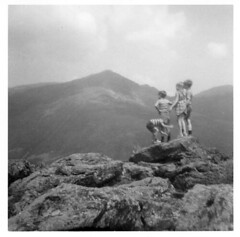
Here's my first summit of Mount Washington. I'm the one to the left pounding the rocks.

To my right are my brother Bill, sister Beth, and brother Rich.

Admittedly, we drove the first 6,280 feet up in the back of a green and tan 1960's VW microbus with a canvas sunroof. We had the bumper sticker to prove it!

In another four weeks, Julie and Abbey and I will be vacationing at the bottom of Mount Washington at Joe Dodge Lodge in Pinkham Notch. I'll be climbing some less exposed peaks during that visit.

Sunday, January 21, 2007

New Life for an Old Waterbed

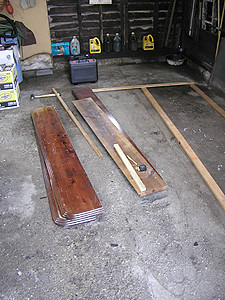
Like many people, twenty or so years ago I bought a water bed. About six years ago, I unplugged the thing, drained and dismantled it, threw out the giant bladder, then stashed all the wood up in the rafters of the garage.

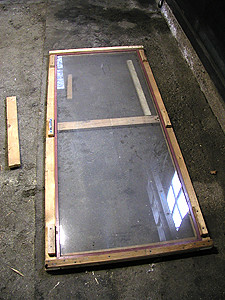
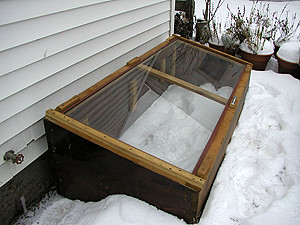
This winter, I got to thinking about building a cold frame. So this noon, I went out in the garage to see what I had on hand and to prepare a list for the lumber yard. As I sifted through the rafters, I found the lumber from that old water bed. I also found an old storm door that I had been saving for a garage sale.

I pulled the stuff down, measured it up, and decided I had enough supplies on hand to make the cold frame without a run to the lumber yard.

I called my friend Eric Doyle to see if he had any interest in spending a somewhat chilly Sunday afternoon puttering around in the garage. While he was on his way over, I got started. Thirty minutes later and I had the top door fully constructed. I made it so that the glass from the storm door could be removed to make it easy to move the cold frame without breaking the glass.

When Eric arrived, we set aside the door and began working on the frame itself.

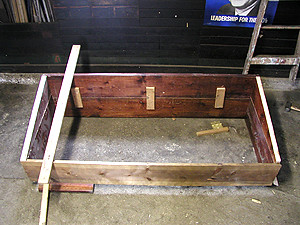
The first step was to join two boards together for the back of the cold frame. The back has to be higher than the front so that the frame collects maximum solar gain.

Then we built the sides. The sides had to be carefully cut so that the angle on both sides was the same.

The we fastened the whole box together. We laid the door on top, and it all sat together well, without too many gaps for the warm air to escape.

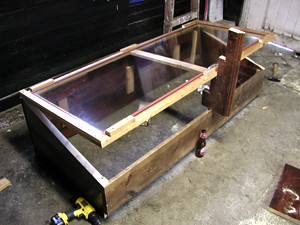
The biggest trick in building the cold frame was to get the hinges to work right. We tried three different approaches before getting them installed to work as needed.

I was glad that I also had a nice assortment of screws, two hefty hinges, and a nice door handle kicking around in the cabinet in the garage. Saving all these leftovers or salvage materials from previous projects saved me a trip to the hardware store.

After washing the glass, we moved the frame to its new home along the south side of our house on top of our oldest raised bed. The white siding of the house behind the frame will certainly help make this a bright spot for starting seedlings.

The frame is portable, so we can move it out of the garden in the summer, or use it to shade lettuce from the heat, and then place it over late crops to extend our fall growing season. Now I'm eager for a few sunny days to melt out the snow inside and for my 2007 seed order to arrive.

When we were done, all that was left from that old water bed, besides a new cold frame, were four or five small pieces of lumber less than a foot in length and a bunch of saw dust. Overall, this was a productive project for recycling useless junk into something of value.

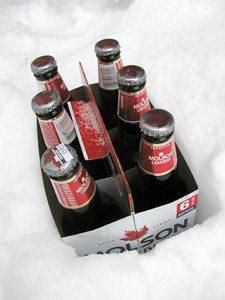
I guess there was a little cost to the project. While waiting for Eric to arrive, I ran to the store and grabbed a six pack. So the total cost of the project was $5.49 plus tax and bottle deposit.

Saturday, January 13, 2007

Run

One of the things I think I like best about the winter months is the slower pace of weekends, particularly Saturdays. In the spring, there is tons of trail work and gardening to do. When summer hits, the gardening is still heavy through the end of July, and home repairs need doing. Summer is also a good time to get the cars in tip-top shape. Then fall brings more trail work and getting things buttoned up for winter.

With our unusually mild winter, Saturdays have been good for getting in long urban hikes and some trail running. Today I was able to get out to the North Country Trail in the Lowell State Game Area for a nice six mile run.

Before and after I walked a little more than a half mile for warm-up and cool-down. All together, I travelled a little more than seven miles of trail and I didn't see a soul the whole time. The woods were peaceful, with a few chattering birds to keep me company (chickadees, juncos and blue jays).

The NCT in Lowell is a nice run. Most of the trail has good footing, and there are a few short but steep hills to build up a little leg muscle (and keep Siler from day dreaming too much). I've seen other runners out there when hiking in the past, so it appears I'm not the only one who likes to run there.

A nice PDF map of the Lowell NCTA can be downloaded here.

Sunday, January 07, 2007

Raising Conservation

Yesterday's entry asked you to comment with your energy-saving resolutions for 2007. Here are some of mine and a link to an article about how people in Japan are saving energy.

My steps towards decreased energy consumption include:

  • Continuing to take the bus to work on days I do not have to travel out of the office, and managing my schedule so that my car days are fewer and bus days more;
  • Switching my food buying priorities from organic products to locally produced products. In Michael Pollan's most recent book, The Omnivore's Dilemma, he shares some shocking contradictions about the organic industry and how much of organic food production is anything but sound conservation (like shipping fresh organic raspberries from Chile to Michigan in January instead of just letting these goodies be a seasonal treat... or even shipping carrots from California in September when we have plenty of our own here in the upper Midwest);
  • Getting more calories and nutrition out of the garden this year;
  • Replacing the old fridge this spring (replacing an older refrigerator is usually the most productive way to reduce electric consumption in the average household, and can often pay for itself in five years or less);
  • And much to my family's chagrin, continuing to be the proverbial grumpy old man who wanders about the house turning off lights and muttering something about pennies.
In yesterday's World Business section, the New York Times featured an overview of Kiminobu Kimura's energy conservation habits. Mr. Kimura is a fairly typical middle-class citizen with a spouse and two children. Yet he probably uses a quarter of the energy in his daily life than the average American.

While Mr. Kimura has access to some of the world's most cutting edge energy conservation devices, much of his conservation comes not from stuff and gizmos, but from daily lifestyle and habits.

You can read more about Mr. Kimura's strategies in The Land of Rising Conservation in the January 6, 2007 New York Times.

And don't forget to share your own strategies.

Saturday, January 06, 2007

What Are YOU Doing in 2007?

Check out this video and then leave me a comment about a couple of simple things you are doing in 2007 to reduce your impact on global warming (or energy use, or your wallet... depending upon your point of view). Consider emailing a friend the link to this entry (click on the envelop below) so that they can add their comments too.


What are YOU doing in 2007?


Tuesday, January 02, 2007

Bright Idea for a New Year

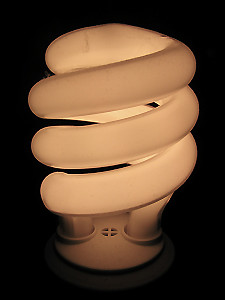
If you haven't made your New Year's resolution yet, here's a simple one for you. Consider replacing all standard sized light bulbs in your home to compact fluorescents.

I'm suggesting this resolution not to pontificate, but to share with you a time and cost savings trick that Julie and I discovered when we replaced eighteen light bulbs in our home with compact fluorescents more than a year ago. Since then, we have saved about 30% on our electric bill; more than $100 in the first year alone, which more than paid for those light bulbs. I also haven't had to replace a single bulb since then. If statistics hold true, I won't have to do so for another three or four years.

Today's New York Times features an article
on how even Wal*Mart is getting into the act of encouraging consumers to make the switch. If Wal*Mart is doing it, you know the bottom line on making the switch has to be the penny pincher.

Here are the reasons why I think my friends and family should make the switch:

* They will save money.
* They will save time.
* They will reduce carbon emissions.
* Even though they have mercury in the bulbs (unlike incandescents), they use and burn less mercury (especially if you live in a state significantly fueled by coal like Michigan).
The only reason I can think about for not making the switch is aesthetics. But truthfully, after a few days, you won't notice the difference. If you do, spend some of your savings on a new lampshade.

Julie and I found the bulbs at $1.25 each after scouring about. I'll bet you can do the same. So it took us about $32 to retrofit our whole house (we had to spend a few more bucks for the outside lights, one of which burns all night).

So make your kids' and your grand kids' future a little brighter and make 2007 the year you switch your home to compact fluorescents. Just don't throw them in the trash (recycle them with your county hazardous waste), and don't buy them at Wal*Mart (shop local).

Friday, December 15, 2006

Scone-da-monium

scone1About this time of year, my friend Kerry Sims and I bake up some batches of scones and find a few neighborhood folks to invite over to indulge in a few too many fat grams and to talk about the neighborhood. Last year was the first time we did this, and it was intended to be more of a competition between Kerry and me. But the people who attended didn't want to start a neighborhood feud, so they declared all the scones excellent.

This year, our friend Anne Bachle-Fifer is hosting. She and her husband Mark just got done remodeling their kitchen, so they have some nice space.

This year, I once again made my toasted oatmeal cinnamon chip scones, which are in the bottom of the top picture. This is a more involved recipe, but still not all that tough to get right. The recipe I start with is the oatmeal scone from America's Test Kitchen. The only augmentation I make is to bake my scones on a preheated baking stone and to add a scant cup of cinnamon chips. I also make sure to cook them plenty long. Nothing is more disappointing than a mushy scone.

scone2The cinnamon scones are rather sweet and crispy, while the other recipe I typically use is more bready and lean (although they are basted with butter before baking). This second recipe was shared by Kerry, and is good for getting creative with the "goodies." This year I made dark chocolate chip with a raspberry stuffing. I've never done these before, so we'll see how they go over. In the past, I've done dark chocolate ginger, dark chocolate orange, cranberry almond, butterscotch chip, and probably some other assortments.

Kerry is reportedly going to try lemon pistachio for tomorrow. He's pretty daring. But he'll be making he espresso, so we won't be too hard on him if they taste strange.

scone3

Tuesday, December 12, 2006

More Positive Friction


Just a quick, shameless plug for a cool new website I tripped across tonight. This one is full of positive energy thinking about how to make the situation in this world better... rather than using up brain cells vetting all that is wrong.

Grab a cup of organic, fair trade coffee and take a look.

Wednesday, December 06, 2006

51 Lantern

51Lantern1I'm really stoked! I just re-assembled a 1951 single-mantle Coleman 220A lantern that my brother Bill had collecting dust in his garage. First try and she fired up!

This lantern is a pretty little gem, with a forest green fountain and a red ventilator. The globe is rounded and has the Coleman logo etched into the glass.

The inside of the fountain was pretty rusty, so I'm not sure how long I'll be able to run it before the valve gums up. I washed it out with gasoline pretty good, but it only takes a little rust to stop up the works.

I replaced the generator and the filler cap, the latter for safety reasons. The old filler caps can be rebuilt, but they have been known to blow gas if loosened; something that you don't really want to do around an open flame.

The only part of the lantern I painted was the frame. Tonight, I oiled the pump, cleaned up the rest, reassembled, then took her out on the back porch to see if it would burn. I pumped her up, placed her in the snow, and she fired right up.

I'll proudly be adding this one to my growing collection. I have a 1962 double-mantle 228E in green that still needs the valve packing replaced. That lantern went on many family camping trips to Montauk Point and Cape Hatteras, and even traveled all the way up to Prince Edward Island in the back of a VW micro bus hauling a 14' day sailer and four happy kids.

The other workhorse lantern in my collection is a green, double-mantle 1977 220F. It's the only one younger than me. It has an amber globe, has been rebuilt, and works very reliably.

Now if you have an old nickle plated Coleman in your attic, just let me know.

Gas Pressure Lanterns, Lamps, Stoves and Irons
International Coleman Collector's Club
Old Town Coleman Center and Museum

Sunday, December 03, 2006

First Ski of the Year

chuckski3Right on cue, December brought the first good snow to west Michigan. The cold air that moved in today brought a few more inches and lots of gracefully floating flakes in the air. Feeling the need for some exercise, I called my friend Chuck to see if he would be interested in a quick ski in the Rogue River State Game Area in northern Kent County.

As luck would have it, Chuck was home and he had the spare time on his hands.

There was just enough snow on the ground for skiing, although the snow closest to the ground was still plenty moist from last week's heavy rains and temperatures in the 60s. But more on that later.

judytreeAfter skiing for about twenty minutes, we came to one of my favorite bluffs over the Rogue River, a place that I jokingly refer to as the "Judy Tree." Since it was quite a while since I had last visited this section of trail, I was surprised to find that the Judy Tree had been toppled in a storm.

As she fell, she split into pieces. The big trunk of this 100 year-old beech fell towards the river, another branch fell to the north, and a twisted mess of branches fell across the trail.

judyWhy do I call her the "Judy Tree?"

Many years ago, when she was still standing and healthy, plenty a jack knife plied her trunk to claim that various unthoughtful souls had passed her way. One particular person that apparently passed her way more than once was Judy. By the evidence on the trunk, Judy had a number of male suitors that felt in necessary to proclaim their love in the smooth bark of this beautiful beech. On the tree could be read "Dave + Judy"... and Mike, and Ron, and Joe...

While Judy was certainly loved, the lack of affection that many a passer by had for the tree eventually lead to its ill health and demise.

The ironic thing was that while it lived, the Judy Tree tightly embraced a neighboring hemlock, leaving a huge scar that can be seen to this day.

chuckski2Chuck and I skied north for a bit more than two miles before turning around. At the turn-around point, we shared a power bar and Chuck dug out a few shelled chestnuts he had purchased from a farmer in Newaygo County.

During our break, we talked about how we hoped that our tracks would cause the snow to freeze a little more firmly.

That was not to be the case. Instead, the wet snow underneath continued to stick to our skis, causing us to have to stop and scrape off the frozen slush.

chuckski1The stuff got so dreadful at times that we could hardly push our skis along. It caused us to wobble and strain.

To the right is a picture of the frozen mass found underneath one of my skis, pine needles and all.

The friction made the skiing hard work. I thought it odd how we were now basically walking through the woods with six foot long and two inch wide snowshoes shaped like elves' booties.

blobYet all the work still didn't keep us from enjoying the wonderful beauty of the newly fallen snow and the flakes drifting around us. Whether we skied past beeches, birch, oaks or hemlocks, the whiteness of the new snow was refreshing.

The beauty and the work made for a nice afternoon, and as we skied back to the Jeep shortly after 5:00pm, the clouds thinned enough to give us a glimpse of the rising full moon.

And the moonlight allowed me to snap one quick last picture of this little troll snatching at my ski! And all along I thought it was the wet snow.

trollski

Sunday, November 26, 2006

Leaving Footprints

head061124Among those who walk, the day after Thanksgiving is typically reserved for a "Turkey Trot." Ideally, this should be a brisk walk in cold weather to help the body burn off all the fat grams consumed the preceding day. In our case this year, it was a slow meander on a warm November afternoon.

I'm also ashamed to say that the walk was followed by a pint of beer and some Mexican food. So much for the good intentions.

As we did two years ago, we met our friend Dick Bolton and about a dozen others up at Deerfield Nature Park in Isabella County. This scenic park is laced with twisty trails, some of which follow or catch glimpses of the Chippewa River.

bridge061124I don't think Julie and I were the only one's feeling a little lazy after the previous day's holiday feast, as most of the hiking boots in our group shuffled and plodded rather slowly down the trail.

With such a big crowd and the leaves all off the trees, there wasn't much for wildlife watching. Instead, we enjoyed some low-impact exercise in the company of good friends.

At the end of the hike, we came upon two curiosities. First was the bridge pictured here. It is a wire suspension bridge, so it bounces actively with every footstep and sways a bit in the breeze. Abbey had a great deal of fun trip-tropping across this bridge again and again.

man061124The second curiosity is the burnished steel sculpture of a hiker that implores visitors to take only memories and leave only footprints. It was nice to see this ethic promoted in a fun, non-preachy way in a rather urbane park that introduces a fairly large number of people each year to the natural mid-Michigan landscape.

We followed the advice of the burnished hiker and took home some memories of good friends, warm November skies, and a lazy walk in the woods.

foot061124

Wednesday, November 15, 2006

Hoist Lakes

DSC_8203On November 3, a friend and I went up to the Hoist Lakes Foot Travel Area for a three day hike. The Hoist Lakes are located in the Huron National Forest in the northeast corner of Michigan's lower peninsula. A cold snap had rolled through the day before, so there were traces of snow and the temps throughout our hike stayed in the 20s and 30s.

DSC_8179We found the area to be devoid of any wildlife, except squirrels and assorted birds. Likewise, we also found the area lacking in other hikers. In all, we only saw five other hikers. All five were in two different groups, and were spotted in the same location 24 hours apart (walking in to South Hoist Lake from the east).

The first day we walked the south perimeter of the foot travel area, starting at the eastern entrance and ending at Byron Lake. We camped on the east bank of Byron Lake that night, high up on a bluff in the red pines.

DSC_8209The next day we hiked out to the west trailhead junction, and then around the north side of the loop, exploring all the interior trails along the way. We are glad that we investigated the interior trails, as they cross some of the best parts of this tract, chocked full of spruce, fir and birch.


DSC_8210That night, we camped on the northeast shore of North Hoist Lake.

Even though there were no significant animal sightings, the area is still interesting. Being from further south, I was impressed by the spruce and fir trees found in the lower, wet areas. I was also taken by some of the stands of birch.

While we didn't see many critters, we sure saw evidence of them. We found dozens of holes dug by badgers, plenty of coyote scat, and hundreds of trees gnawed on by beaver. At night we heard the barred owls, howling coyotes and splashing beavers.

The area looks attractive for crosscountry skiing, and I'd like to get back there for some of that this winter. If you're interested in hiking this area, a downloadable map can be found here.

DSC_8198