Showing posts with label conservation. Show all posts

Saturday, April 12, 2008

Big Shots

hepatica
Today was too rainy for working in the yard, so I went out and did some maintenance on my adopted section of the North Country Trail in the Rogue River Sate Game Area. The birds didn't seem to mind the rain and were chirping away. I wished I wasn't so busy, I would have liked to watch them.

It was only about 40 degrees, and raining off and on. I had to keep moving to keep warm. So I guess it was good that there were a number of fallen trees across the trail that required me to swing my ax.

Other than the birds, the woods were silent in their wetness. As I swung my ax into a fallen oak, the blade cracked through the woods. Each swing was like a gun shot going off. Crack! Crack! Crack!

Just me, the birds, the dripping rain and the sound of my ax.

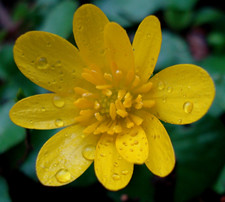
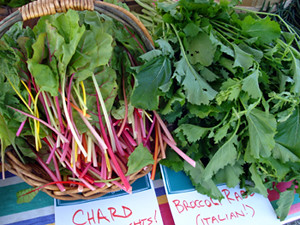
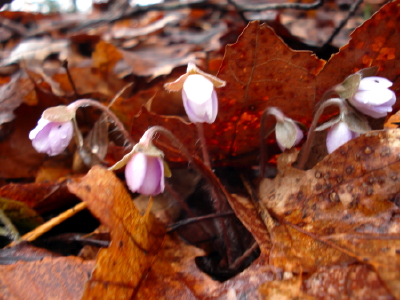
At one point, as I was rummaging through my rucksack, I saw some tiny hepatica pushing up the leaves nearby. I had to look twice. The woods are late coming into spring this year.

Everything was so brown and gray. So when I saw these tiny hepatica closed up from the cold and rain, I was quite pleasantly surprised.

As bold as they were, pushing back last year's oak leaves, I thought they too were big shots. Braving the icy rains to bring forth the promise of spring.

Spring rain and birdsong
in a brown and gray woods.
Soft leaves under my feet.
Sharp ax meets hard oak
like a shot from a gun, cracking
through the woods.
Birds,
dripping rain,
the sound of my ax.

Look! There are some tiny hepatica pushing back last year's oak leaves!

They too are big shots,
braving the the icy rain
the promise of spring.


Thursday, April 10, 2008

Ken's Video

We did a little trail work on the North Country Trail up by Highbanks Lake in Newaygo County this past Saturday. My friend Ken Knight shot this video.


Making a Difference: Building New Trail from Ken Knight on Vimeo

Thursday, August 09, 2007

FRESH Idea

Today I got to see a great idea in action. Project FRESH is a nutrition program that does far more than promote nutrition. To be honest, from my perspective as a gardener and a person interested in community building, I think that nutrition just happens to be a side benefit of Project FRESH.

Here's how it works. In the late 1980's, a number of states (including Michigan) decided that it might be a good idea to create a way for low-income folks benefiting from US Department of Agriculture programs like WIC to have access the fresh vegetables and fruits found in farmers' markets.

Today, Project FRESH is a mainstay of the Women, Infants and Children (WIC) nutrition program in many states. The project provides coupons to WIC participants that they can spend at local farmers' markets. Well received by new mothers, the program has been expanded to serve seniors through Senior Project FRESH. At the end of the day, the farmers trade in the coupons for cash.

Sure, this is a creative way to encourage poor people to eat fresh produce, which is a noble idea but an ethic I'm not all that sure I support over giving poor people the same choices as those with cash.

The better part of this program is the way in which these public dollars are multiplied eight times as they:

  1. Feed the poor,
  2. Introduce people to new, local foods,
  3. Financially support small, local farmers,
  4. Help build local food systems instead of trucking under-ripe veggies across the continent,
  5. Introduce consumers to farmers (people who are often not only from different geographical communities, but also typically of different races and ethnicities),
  6. Build community by promoting commercial amenities like markets,
  7. Build more community by creating places where people gather and meet their neighbors,
  8. And bring people back into touch with real food and how it is really grown.
Here in Michigan, Project FRESH is administered by the Michigan Department of Community Health in cooperation with the U.S. Department of Agriculture and Michigan State University Cooperative Extension. Local health agencies and MSU extension offices statewide deliver Project FRESH services in cooperation with the organizers of local farmers' markets.
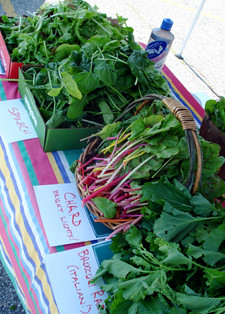
Earlier this year, I had the opportunity to sell some of my Perkins Garden surplus at the new and emerging Southeast Community Farmers' Market, which recently moved to the corner of Franklin and Fuller in partnership with Divine Grace Ministries and the Greater Grand Rapids Food Systems Council. That Thursday I sold spring greens, early chard and broccoli raab that was sure to bolt while I was away on vacation the next week. While my produce and the market customers were not the best match, I did earn a dozen or so bucks which were tossed into the Food System's community garden fund.

Today I returned with a surplus of about 20 golden zucchinis, 30 cucumbers, four heads of lettuce, a handful of white baby eggplants, and three pints of purple beans. The veggies and the shoppers were a much better match and I only came home with a half dozen cucumbers and the eggplants. I netted more than twenty bucks from produce that otherwise probably would have eventually been sent to the compost pile, The cash itself was composted if you will, returned to the community garden program to make the program more fertile.

But the best part of it was that half of the dollars earned were federal tax dollars that fed the poor, built community, supported local community gardens, strengthened the local food system, and kept one more box full of veggies back in California where they were grown and belong.

In this day of scarce resources, it's good to see federal dollars supporting conservation by building local food systems instead of propping up the old industrial model that relies upon cheap oil from the middle east to ship veggies that can be grown anywhere everywhere.

I count it as a good day when I can see and experience a creative idea like Project FRESH that has the support of both the government and local people. It's an especially good day when the program works as well as this one does.
Tuesday, July 31, 2007

Transit Leadership


Does your Mayor ride the bus?

Lots of Mayors howl about public transit, but few ride it faithfully... let alone sporadically.

Alleged presidential aspirant Mayor Bloomberg of NYC says he rides mass transit religiously (in this case, the subway). But does he? The New York Times published a telling expose today on the Mayor's transit habits. Yes, he does ride the train two days a week, but doing so involves two gas-guzzling, carbon-belching SUVs.

It appears that the Mayor of Gotham takes transit not because it's the right thing to do for the earth and all, but because it is part of his image.

I was at a mayoral forum in Grand Rapids last week. As a regular rider myself, it was easy for me to discern from their answers that none of our aspirants has recently held a bus pass for the Rapid.

Does your Mayor ride the bus?

Monday, July 30, 2007

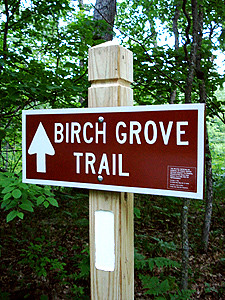
Birch Grove Trail

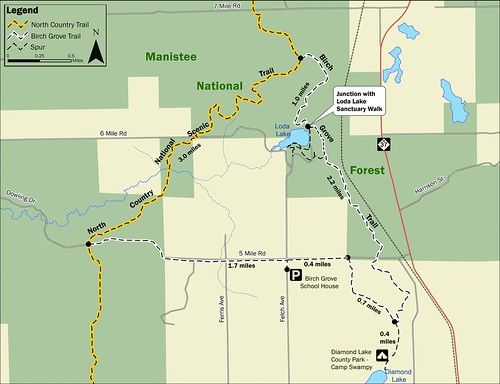
Earlier I wrote a few times about the Birch Grove Trail, a new hiking loop the Western Michigan Chapter of the NCTA has been building up near the Loda Lake Wildflower Sanctuary, north of White Cloud in the Manistee National Forest.

Well, the loop was officially opened on June 2 this year. The work is 99% done. We just have three signs to place, but they aren't essential if you have a map. Lucky for you, I've posted a link to a download-able, printable one here.

I'd highly recommend this loop for a summertime stroll. Besides, we need the feet to beat back the bracken ferns on this new trail. Sure, springtime is best for wildflowers and fall good for colors, but the shade of the woods can't be beat in summer.

If you're looking for other place in Michigan to take a summer stroll, check out Mike Ingels' blog. Mike's a history buff, a good writer, has an eye for the unique in the ordinary, and has summers off to do lots of blogging.

Wednesday, July 18, 2007

Greenwash


I try to keep this blog focused on the positive and do my best to keep from ranting here. Going negative would be too cheap and easy, make for dull reading, and be like 97.6% of the rest of the blogosphere.

But every now and then I have to point out something inane. Actually, I won't do it. I'll let James Howard Kunstler do it. (After July 2007, you'll have to check his archives for the rant).

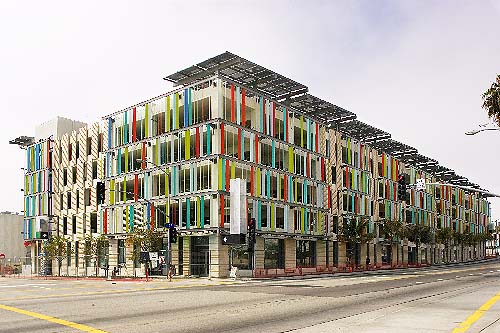
This parking ramp in LA should take the 2007 award for greenwashing hogwash.

Saturday, March 31, 2007

Back on the Trail

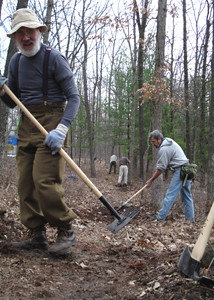
Today was our first day back doing trail work with the North Country Trail Association Western Michigan Chapter. Along with Larry Meyer, I help lead work crews in the Manistee National Forest. Today's work was on a 8-10 mile loop trail we are building that will link the Chapter's Schoolhouse, the Loda Lake Wildflower Sanctuary, and the North Country Trail.

In less than five hours of work, we built nearly a mile of new trail. The volunteers that turned out today were certainly the hardest working crew we've seen in quite some time. Of course the cool temperatures and overcast skies kept folks working.

While most of the forest is still quite brown and dry, it's obvious by the smells and birdsong that spring is not too far away. After we were done putting in the new trail tread, we drove around to remove a few trees that had blown down across the trail and I spied a few marsh marigolds blooming along the side of a woods road.

Friday, February 23, 2007

A Little About My Work

On Monday, I gave a presentation at Calvin College that I was asked to make regarding childhood lead poisoning and environmental justice. The notice on the campus calendar resulted in a query from Kirstin Vander Giessen-Reitsma for a submission to Catapult Magazine. Catapult is a pretty cool netzine for recovering Calvinists and others interested in culture, faith and community.

In response to her query, and since I had already collected my thoughts for the presentation, I provided this article.

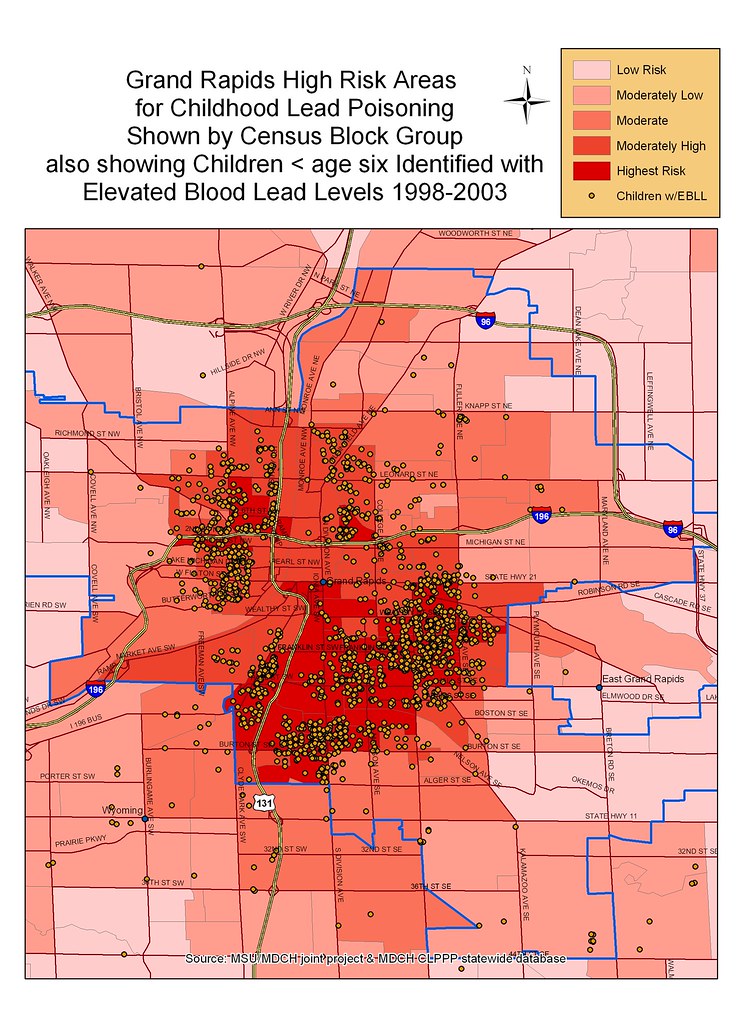
By way of a little background, here's a map that shows where the kids who have lead poisoning in Grand Rapids live. Those of you familiar with our fair city will see the clear link between income, race, ethnicity and lead. Click the map for a larger version.

For more data and maps, download this PDF (5.6 MB) from my work website.

Wednesday, January 31, 2007

Local Thoughts

A couple of things I did this week got me to thinking a bit about how much plain old ordinary folks have to offer.

Monday evening I went to hear Wangari Maathai speak about the Greenbelt Movement, a now international movement to reforest central Africa. Dr. Maathai spoke about how she moved from a scientific study of the effects of ticks on cattle to a commonsense study of Kenyan women, their needs, and trees. The short of it is that she listened to and worked with these women to figure out how to heal their land through reforestation so that they themselves could be healthy.

She told many stories of how conventional science and forestry were trumped by the local knowledge and hard work of individual women.

Tonight, I went to see the film "Broken Limbs," which tells the stories of apple farmers in the Wenatchee Valley of central Washington. The film was sponsored by Farms Without Harm and the Greater Grand Rapids Food Systems Council.

The film explored the impacts of globalization and the current consumer-driven, industrial-scale food system on the livelihood of apple farmers. Not all doom and gloom, the film wrapped up by sharing the stories of some farmers who discovered how to operate in the face of such a seemingly all-powerful system. It also spoke of the non-farming folk that are an important part of the equation.

After the film, a man got up and spoke about his work as a local farmer. He spewed a bunch of half-baked philosophy about the "fundamental" solutions to health and the environment. But where his talk was as holey as Swiss cheese, his actions are to be admired. This farmer, along with some others, has made the connection between the food he grows and the health system that spends so much time fixing people who have been broken by the deficiencies of the dominant American food system and culture. Along with his peers at the Sweetwater Farmers Market, he has persuaded a local hospital to make the connection between food and health and to be an active partner in promoting the sale and consumption of local produce in their building lobby twice a month.

Lastly, when I came home tonight, I read an article online that was in last Sunday's New York Times Magazine. "Unhappy Meals" is written by Michael Pollan, the same guy that wrote "The Omnivore's Dilemma." In the article, Mr. Pollan wisely suggests that a commonsense approach to eating will probably make us all healthier. He explains in quite some detail how putting food under the microscope has caused us to focus too often on the wrong things for the wrong reasons.

In the end, he offers nine suggestions for how people can eat better; and not just for their own health, but for the health of those around them and the world at large. Pollan suggests:

1. Eat food.
2. Avoid even those food products that come bearing health claims.
3. Especially avoid food products containing ingredients that are a) unfamiliar, b) unpronounceable c) more than five in number — or that contain high-fructose corn syrup.
4. Get out of the supermarket whenever possible.
5. Pay more, eat less.
6. Eat mostly plants, especially leaves.
7. Eat more like the French. Or the Japanese. Or the Italians. Or the Greeks.
8. Cook. And if you can, plant a garden.
9. Eat like an omnivore. Try to add new species, not just new foods, to your diet.
Each story got me thinking about how, one-by-one, it is our own small actions that can collectively lead to large scale change. Might this not be a good year to plant a native tree? Buy only local apples? Make it a habit to support your local farmers? Eat food...like a French omnivore?

Sunday, January 21, 2007

New Life for an Old Waterbed

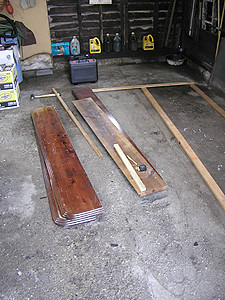
Like many people, twenty or so years ago I bought a water bed. About six years ago, I unplugged the thing, drained and dismantled it, threw out the giant bladder, then stashed all the wood up in the rafters of the garage.

This winter, I got to thinking about building a cold frame. So this noon, I went out in the garage to see what I had on hand and to prepare a list for the lumber yard. As I sifted through the rafters, I found the lumber from that old water bed. I also found an old storm door that I had been saving for a garage sale.

I pulled the stuff down, measured it up, and decided I had enough supplies on hand to make the cold frame without a run to the lumber yard.

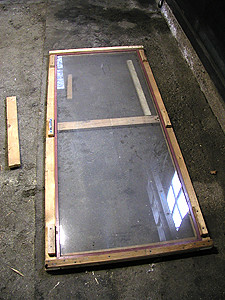
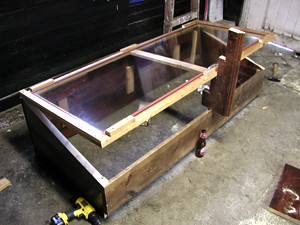
I called my friend Eric Doyle to see if he had any interest in spending a somewhat chilly Sunday afternoon puttering around in the garage. While he was on his way over, I got started. Thirty minutes later and I had the top door fully constructed. I made it so that the glass from the storm door could be removed to make it easy to move the cold frame without breaking the glass.

When Eric arrived, we set aside the door and began working on the frame itself.

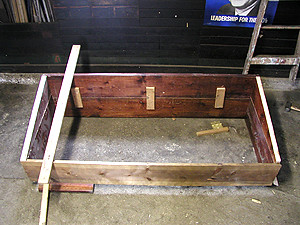
The first step was to join two boards together for the back of the cold frame. The back has to be higher than the front so that the frame collects maximum solar gain.

Then we built the sides. The sides had to be carefully cut so that the angle on both sides was the same.

The we fastened the whole box together. We laid the door on top, and it all sat together well, without too many gaps for the warm air to escape.

The biggest trick in building the cold frame was to get the hinges to work right. We tried three different approaches before getting them installed to work as needed.

I was glad that I also had a nice assortment of screws, two hefty hinges, and a nice door handle kicking around in the cabinet in the garage. Saving all these leftovers or salvage materials from previous projects saved me a trip to the hardware store.

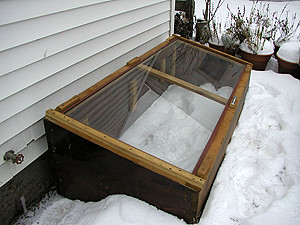
After washing the glass, we moved the frame to its new home along the south side of our house on top of our oldest raised bed. The white siding of the house behind the frame will certainly help make this a bright spot for starting seedlings.

The frame is portable, so we can move it out of the garden in the summer, or use it to shade lettuce from the heat, and then place it over late crops to extend our fall growing season. Now I'm eager for a few sunny days to melt out the snow inside and for my 2007 seed order to arrive.

When we were done, all that was left from that old water bed, besides a new cold frame, were four or five small pieces of lumber less than a foot in length and a bunch of saw dust. Overall, this was a productive project for recycling useless junk into something of value.

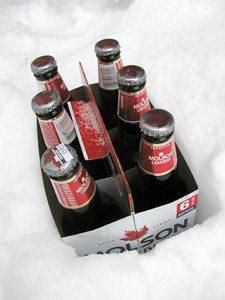
I guess there was a little cost to the project. While waiting for Eric to arrive, I ran to the store and grabbed a six pack. So the total cost of the project was $5.49 plus tax and bottle deposit.

Sunday, January 07, 2007

Raising Conservation

Yesterday's entry asked you to comment with your energy-saving resolutions for 2007. Here are some of mine and a link to an article about how people in Japan are saving energy.

My steps towards decreased energy consumption include:

  • Continuing to take the bus to work on days I do not have to travel out of the office, and managing my schedule so that my car days are fewer and bus days more;
  • Switching my food buying priorities from organic products to locally produced products. In Michael Pollan's most recent book, The Omnivore's Dilemma, he shares some shocking contradictions about the organic industry and how much of organic food production is anything but sound conservation (like shipping fresh organic raspberries from Chile to Michigan in January instead of just letting these goodies be a seasonal treat... or even shipping carrots from California in September when we have plenty of our own here in the upper Midwest);
  • Getting more calories and nutrition out of the garden this year;
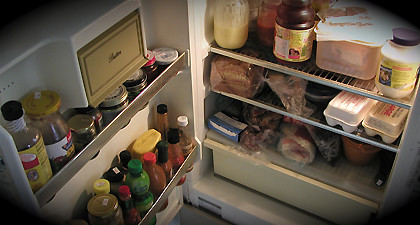
  • Replacing the old fridge this spring (replacing an older refrigerator is usually the most productive way to reduce electric consumption in the average household, and can often pay for itself in five years or less);
  • And much to my family's chagrin, continuing to be the proverbial grumpy old man who wanders about the house turning off lights and muttering something about pennies.
In yesterday's World Business section, the New York Times featured an overview of Kiminobu Kimura's energy conservation habits. Mr. Kimura is a fairly typical middle-class citizen with a spouse and two children. Yet he probably uses a quarter of the energy in his daily life than the average American.

While Mr. Kimura has access to some of the world's most cutting edge energy conservation devices, much of his conservation comes not from stuff and gizmos, but from daily lifestyle and habits.

You can read more about Mr. Kimura's strategies in The Land of Rising Conservation in the January 6, 2007 New York Times.

And don't forget to share your own strategies.

Saturday, January 06, 2007

What Are YOU Doing in 2007?

Check out this video and then leave me a comment about a couple of simple things you are doing in 2007 to reduce your impact on global warming (or energy use, or your wallet... depending upon your point of view). Consider emailing a friend the link to this entry (click on the envelop below) so that they can add their comments too.


What are YOU doing in 2007?


Tuesday, January 02, 2007

Bright Idea for a New Year

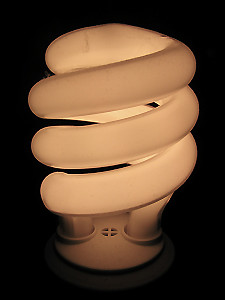
If you haven't made your New Year's resolution yet, here's a simple one for you. Consider replacing all standard sized light bulbs in your home to compact fluorescents.

I'm suggesting this resolution not to pontificate, but to share with you a time and cost savings trick that Julie and I discovered when we replaced eighteen light bulbs in our home with compact fluorescents more than a year ago. Since then, we have saved about 30% on our electric bill; more than $100 in the first year alone, which more than paid for those light bulbs. I also haven't had to replace a single bulb since then. If statistics hold true, I won't have to do so for another three or four years.

Today's New York Times features an article
on how even Wal*Mart is getting into the act of encouraging consumers to make the switch. If Wal*Mart is doing it, you know the bottom line on making the switch has to be the penny pincher.

Here are the reasons why I think my friends and family should make the switch:

* They will save money.
* They will save time.
* They will reduce carbon emissions.
* Even though they have mercury in the bulbs (unlike incandescents), they use and burn less mercury (especially if you live in a state significantly fueled by coal like Michigan).
The only reason I can think about for not making the switch is aesthetics. But truthfully, after a few days, you won't notice the difference. If you do, spend some of your savings on a new lampshade.

Julie and I found the bulbs at $1.25 each after scouring about. I'll bet you can do the same. So it took us about $32 to retrofit our whole house (we had to spend a few more bucks for the outside lights, one of which burns all night).

So make your kids' and your grand kids' future a little brighter and make 2007 the year you switch your home to compact fluorescents. Just don't throw them in the trash (recycle them with your county hazardous waste), and don't buy them at Wal*Mart (shop local).

Tuesday, December 12, 2006

More Positive Friction


Just a quick, shameless plug for a cool new website I tripped across tonight. This one is full of positive energy thinking about how to make the situation in this world better... rather than using up brain cells vetting all that is wrong.

Grab a cup of organic, fair trade coffee and take a look.